Sumitomo and Co-Creation—Articulating a Vision—
Sumitomo Precision Products
The dream of hydrogen-powered aircraft is coming within reach. In June 2026, Sumitomo Precision Products announced that it had developed a liquefied hydrogen heat exchanger for hydrogen-combustion civil aircraft engines and completed demonstration testing under real-world conditions. Japan’s first hydrogen heat exchanger for civil aircraft is a crucial component of a project led by Kawasaki Heavy Industries, commissioned by the New Energy and Industrial Technology Development Organization (NEDO), to develop core technologies for hydrogen-powered aircraft. Its successful development is a major step toward achieving carbon neutrality by 2050.
The aviation industries have continued to expand, driven by economic growth in emerging markets. However, aviation accounts for approximately 2% of global greenhouse gas emissions as of 2025, making decarbonization an urgent priority for the industry. Pressure to decarbonize is mounting rapidly. In 2022, for example, the International Civil Aviation Organization (ICAO) adopted a long-term goal of achieving net-zero carbon emissions by 2050 for international civil aviation operations. Japanese government is also promoting the commercialization of hydrogen-powered aircraft under the Green Growth Strategy, with 51.08 billion yen allocated from NEDO’s Green Innovation Fund to next-generation aircraft development.

Sumitomo Precision Products began operations in 1961, building on expertise in the precision machining of high-strength metals developed through the manufacture of aircraft equipment. The company is known for its aircraft landing gear systems and engine heat exchangers. But a decisive advantage in developing the liquefied hydrogen heat exchanger came from another field: heat exchangers for hydrogen refueling stations, which supply hydrogen to fuel cell vehicles. The company has been working on these heat exchangers since around 2015.
Hydrogen refueling stations require ultra-high-pressure hydrogen to be maintained at an appropriate temperature. Over more than a decade, Sumitomo Precision Products has accumulated a lot of expertise in areas ranging from measures to mitigate the risk of hydrogen-induced metal degradation to the selection of suitable materials and testing methods. But such expertise gained in industrial applications cannot simply be transferred to aircraft. While large, robust, and heavy heat exchangers can be used at hydrogen refueling stations, lightweight heat exchangers are required for aircraft along with exceptionally stringent safety requirements to prevent accidents such as explosions and fuel leaks.
Nevertheless, the technological foundation and expertise built up through the company’s work on hydrogen refueling stations—particularly in selecting materials and determining how to test them to ensure safety—significantly shortened the development cycle.
The greatest technical challenge the heat exchanger had to overcome was the extreme temperature difference. The liquefied hydrogen used as fuel is at a cryogenic temperature of around −250°C. At the other extreme, the heat exchanger uses hot exhaust gas from the jet engine to raise the temperature of the hydrogen, with the exhaust gas reaching several hundred degrees Celsius.
Industrial heat exchangers can be operated so that the temperature rises gradually, avoiding the thermal shock caused by rapid temperature changes. For aircraft applications, however, this is not an option. If an engine shuts down in flight, it must be restarted immediately, requiring the heat exchanger to withstand sudden changes in temperature. This, the company says, was the most challenging aspect of the development.
Stainless steel was selected for the tubes, whose pronounced curvature is the key to accommodating the extreme temperature changes. Numerous individual tubes are arranged in a coil, with their curvature allowing them to flexibly absorb the expansion and contraction caused by changes in temperature. Although bending tubes to provide flexibility is a long-established technique, the company has applied for some patents on the mechanism that allow the individual tubes within the bundle to move slightly relative to one another. The design was fully optimized using structural and thermal-fluid analysis that simulated actual operating conditions. The results ensure its safety.

An aircraft heat exchanger is mounted in the nozzle section at the rear of the jet engine, where it is exposed to high-temperature exhaust gas flowing at high speed. Increasing the robustness makes it heavier and larger, which can adversely affect propulsion. The heat exchanger must therefore be compact and lightweight despite handling a hazardous fuel. Also, safety is the top priority, as the protection of human life is of utmost importance. Reconciling these conflicting requirements was at the heart of the development effort.
The welding joints were carefully designed to avoid excessive stress, while rigorous leak tests and X-ray inspections were used to ensure that the welds were free of defects. Surfaces were finished with smooth contours to prevent stress concentrations and minimize the risk of failure. The design was then brought to life by the craftsmanship of Sumitomo Precision Products’ welding technicians.
With the cooperation of the Japan Aerospace Exploration Agency (JAXA), a series of tests using liquid hydrogen was conducted at the Noshiro Rocket Testing Center in Noshiro, Akita Prefecture. To simulate jet engine exhaust, a test facility combining numerous heaters with large blowers was constructed. Operating the facility required a massive generator weighing around 8 to 10 tons.
The most demanding test was the thermal shock test, which involved rapidly introducing cryogenic liquid hydrogen into the heated heat exchanger. A 20-meter exclusion zone was established around the test site, multiple hydrogen detectors were installed, and the system was configured to shut down immediately if any abnormality was detected. No problems occurred, demonstrating the safety of the heat exchanger. The company also conducted a range of other tests, including severe vibration testing under conditions exceeding those anticipated in actual operation. The heat exchanger successfully passed them all.
Dozens of people were involved in the five-year project, which began in fiscal 2021. Starting in 2026, the completed heat exchanger will be used in engine testing by Kawasaki Heavy Industries. Following ground demonstration testing through fiscal 2030, the goal is to install the heat exchanger in aircraft engines and proceed with commercialization.
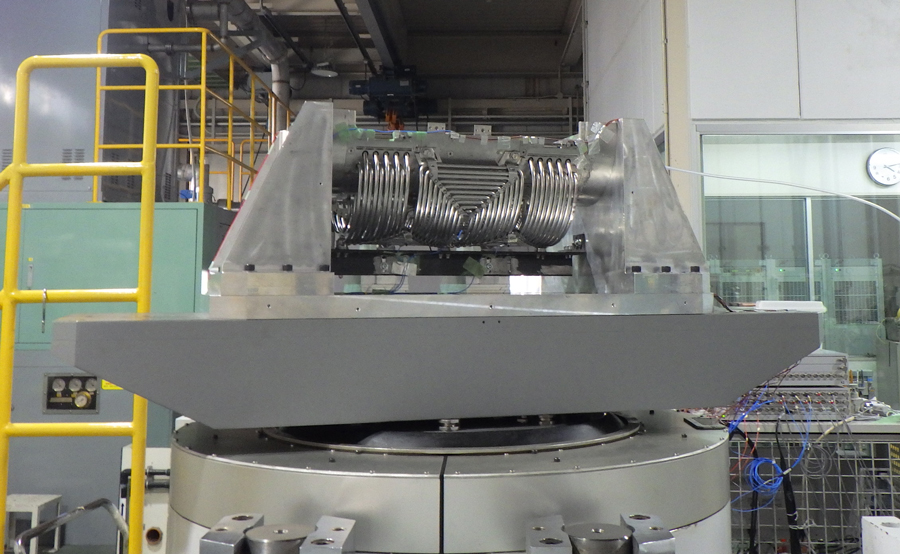
The testing to date has demonstrated the performance of the heat exchanger as a standalone component. However, some uncertainty remains over how it will perform when integrated into the engine system as a whole. Given that the heat exchanger is regarded as one of the most critical components of the hydrogen fuel system, the stakes will be high in the next phase of testing.
A heat exchanger alone cannot make hydrogen-powered flight a reality. In addition to supporting equipment such as pumps and valves, ground infrastructure is essential to transport liquefied hydrogen to airports and refuel aircraft. Unless the hydrogen itself is green hydrogen, however, the benefits in terms of decarbonization could be substantially reduced. European aircraft manufacturer Airbus has also identified the development of the hydrogen ecosystem, including infrastructure, as a major challenge. Meeting that challenge will require continued efforts by both the public and private sectors.
Sumitomo Precision Products is looking beyond hydrogen and has begun research into a range of heat exchangers for next-generation aircraft. In the field of hybrid-electric aircraft, it is also contributing technology to a JAXA project. The company says it has attracted interest from several aircraft manufacturers in Japan and overseas. With no dominant global player yet to emerge in this field of industrial technology, attention is also focused on whether Japan can establish itself as a frontrunner. And part of the technology that could hold the key is contained within a heat exchanger just 50 centimeters in diameter.
*The achievements described in this article resulted from “Research and Development Item 1: Development of core technologies for hydrogen aircraft,” conducted under the “Next-generation Aircraft Development” (JPNP21030) as part of the Green Innovation Fund Projects of the New Energy and Industrial Technology Development Organization (NEDO).
 Journalist Shumon Mikawa on Sumitomo’s DNA

 EN