Accelerating new market development through innovative material branding
Sumitomo Metal Mining developed a groundbreaking material that absorbs near-infrared rays, which produce heat, while allowing visible sunlight to pass through. Although the material has been in use for nearly 20 years, the company is now stepping up its branding strategy to expand its application into new fields, such as the apparel sector.
In today’s world, a material’s technological strength alone isn’t enough to survive
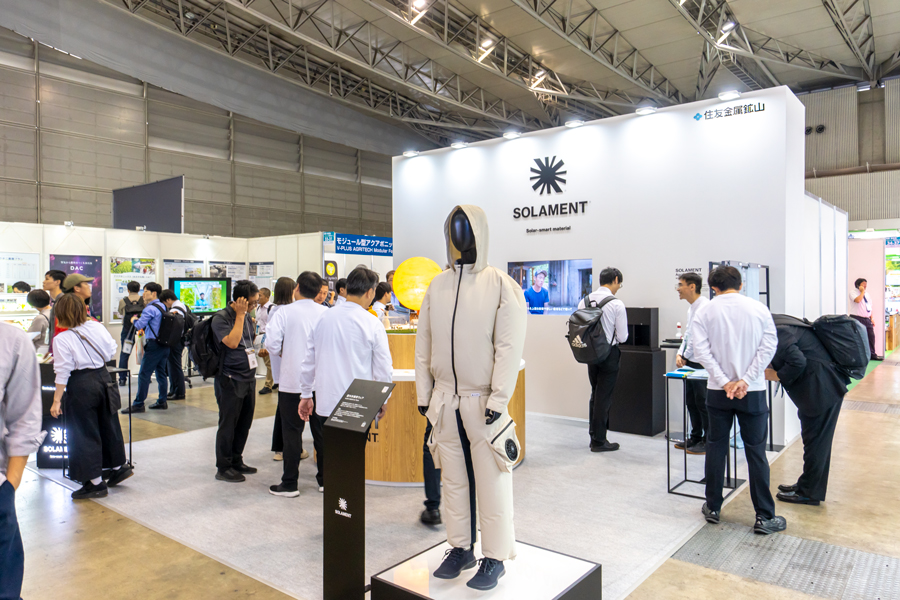
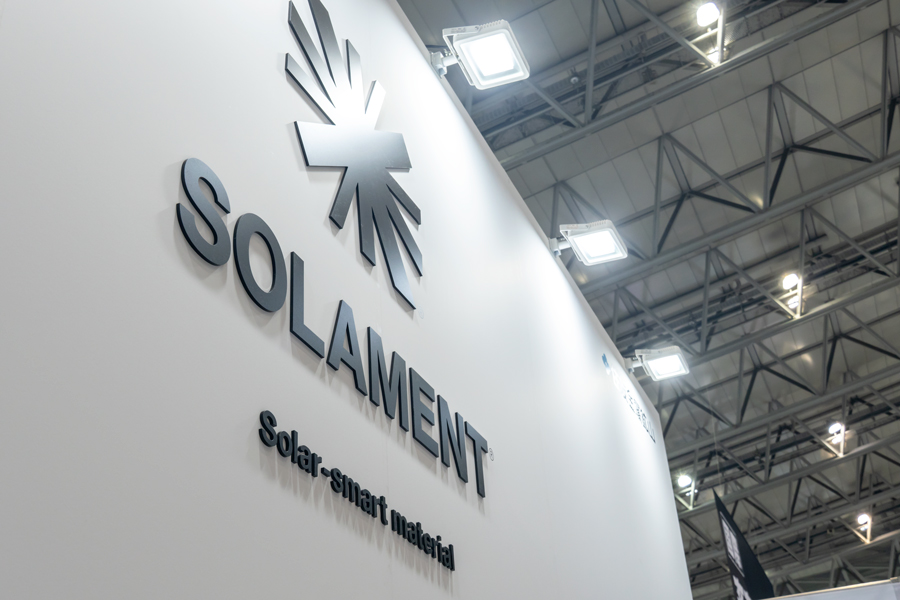
At Makuhari Messe in Chiba City, where J-AGRI—Asia’s leading agriculture and livestock expo—was held in early October 2025, Sumitomo Metal Mining set up a booth to promote its innovative material under the SOLAMENT® brand, which the company began rolling out in earnest in the fall of 2023.
“HOPE WEAR for Farm,” a concept model for agriculture that leverages SOLAMENT, a material technology controlling sunlight, was unveiled.
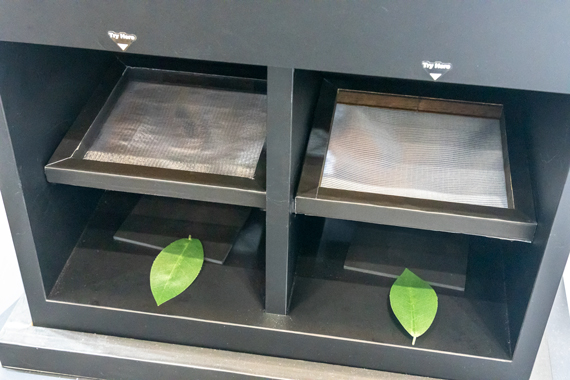
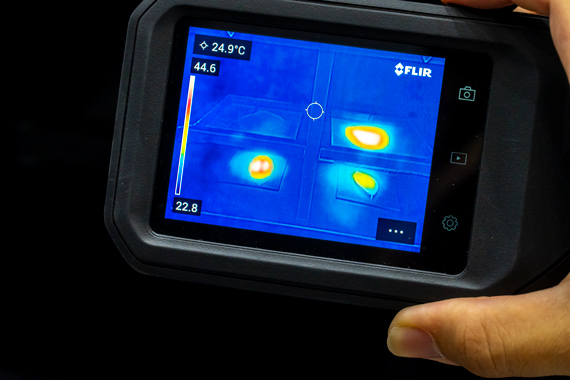
Near-infrared rays account for roughly 42% of the sunlight that reaches the Earth’s surface. They are the reason our skin and objects warm up when exposed to the sun. While this warmth is welcome in winter, controlling near-infrared radiation is crucial for coping with the intense heat waves that Japan experiences every summer.
SOLAMENT is Sumitomo Metal Mining’s effort to establish the near-infrared control technology it developed roughly 20 years ago as a distinct material brand. This technology is already used in automotive and architectural films and has built a solid track record in global markets. Even so, the company has chosen to break away from its traditional B2B business model and pivot toward a branding strategy aimed directly at consumers.
Sumitomo Metal Mining showcased SOLAMENT, a material technology that controls sunlight, at the AGRI WEEK, a trade show held at Makuhari Messe in October 2025.
The shift comes against the backdrop of dramatic change in the materials industry. Even materials developed over 10 to 20 years with heavy investment of time and money are quickly imitated by competitors, and products rapidly become obsolete. Furthermore, the investment environment has changed markedly, with shareholders increasingly demanding shorter payback periods, making long-term investments ever more challenging.
Surviving on technological differentiation alone has become increasingly difficult. Sumitomo Metal Mining therefore decided to enhance the value of its one-of-a-kind, hard-to-imitate, technologically advanced material through branding. “For SOLAMENT, we judged that branding can deliver leverage more quickly than further technological development,” the company explains.
From B2B to B2C2B
What sets SOLAMENT's brand strategy apart is its choice of the apparel sector for the initial breakthrough. Before introducing a brand strategy, Sumitomo Metal Mining, as a materials manufacturer, considered only textile manufacturers as potential customers in this sector. Yet it is ultimately the end-product makers, such as clothing manufacturers, and consumers who determine the value of a material based on the quality of the products it is used in. Pursuing a “B2C2B” approach, in which the perceived value of the material is first elevated among consumers to drive actual business transactions, the company concluded that targeting the apparel sector, which directly reaches consumers, was the most effective way to strategically establish its brand.
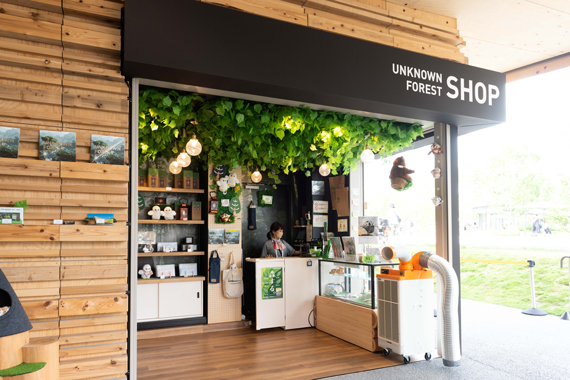
As a B2B company, Sumitomo Metal Mining previously had no direct contact with consumers. Even when promoting the specifications of its near-infrared-absorbing material, it received only a couple of inquiries a year from the apparel industry. Since the 2023 rebranding, however, hundreds of apparel manufacturers have reached out, seeing potential to add new value to their own products. At the shop adjacent to the Sumitomo Pavilion at Expo 2025 Osaka, Kansai, Japan, SOLAMENT was used for a parasol/umbrella with enhanced heat-shielding performance. Though priced at a premium 12,100 yen (including tax) each, all 400 sold out almost immediately.
The shop adjacent to the Sumitomo Pavilion at Expo 2025 Osaka, Kansai, Japan
Parasol/umbrella featuring enhanced heat-shielding performance with SOLAMENT
These results have also spurred collaboration with outdoor brands such as Snow Peak. In addition, when the material was used in fan-equipped workwear, the internal temperature dropped by as much as 19.3°C compared with conventional workwear.
In agriculture, Notoshichi, an F-net manufacturer based in Ishikawa Prefecture, has developed a heat-shielding net called “Aotenjo.” When installed in plastic greenhouses, it can reduce ground temperature by as much as 8.5°C reduce ground temperature by a maximum of 8.5°C during summer. By absorbing the heat-generating near-infrared rays, the net makes greenhouses so cool that, during scorching summers, some farmers actually take refuge inside—places they would normally avoid because of the heat.
However, Sumitomo Metal Mining is not targeting the mass production or mass consumption market. Its benchmark is the material brand GORE-TEX®, established in the apparel sector. SOLAMENT’s branding strategy is to start in the high-end market and gradually introduce its technology, following the example of GORE-TEX®.
To gain a foothold in the consumer-facing apparel market, Sumitomo Metal Mining partnered with Takisada Nagoya, a textile trading company with 160 years of experience. This collaboration allows for hands-on joint development, from the material itself to yarn structure and weaving techniques.
By allowing visible light to pass through while absorbing heat-generating near-infrared rays, it helps keep crop surface temperature down. This prevents leaf scorch and fruit cracking, safeguarding crop quality.
An ambitious experiment to transform society through materials
SOLAMENT is an inorganic material with high weather resistance. By leveraging its durability, it may be possible to create intangible value when it is incorporated into consumer goods.
Sumitomo Metal Mining’s goal is not simply to expand sales of materials. Through SOLAMENT, it is undertaking an ambitious experiment to explore a new path for materials manufacturers.
Journalist Shumon Mikawa on Sumitomo’s DNA
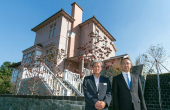
Sumitomo Metal Mining carries on the founding businesses of the Sumitomo Group. The company traces its origins to copper smelting in Kyoto and resource development at the Besshi Copper Mines in Ehime Prefecture. Sumitomo’s philosophy of “benefitting oneself and benefitting others” has been passed down through the generations at Sumitomo Metal Mining. New employees visit the Besshi Copper Mines upon joining the company and see photographs of the barren mountains stripped of trees during mine development. In response to the smoke pollution that affected nearby towns, Sumitomo’s Director-General at the time invested profits equivalent to roughly five years of sales over an eight-year period to carry out a reforestation project—an initiative that became the foundation of today’s Sumitomo Forestry.
Sumitomo Metal Mining emits significant amounts of carbon dioxide (CO2) through its mineral smelting operations. The materials business, however, plays a role in “bringing this to net zero.” The near-infrared ray control technology SOLAMENT is intended to help achieve this goal. For Expo 2025, the company created a parasol/umbrella with enhanced heat-shielding using SOLAMENT, which attracted considerable attention. Contributing to society, rather than simply pursuing profit: the lesson from the Besshi Copper Mines still guides Sumitomo Metal Mining.

 EN
EN

 Journalist Shumon Mikawa on Sumitomo’s DNA