A fortress safeguarding corporate memory: Supporting business continuity and contingency preparedness
Information is the lifeblood of a company, and managing it is vital for the continuity of business operations. Accounting documents, contracts, research and development data, customer information—if such “corporate memory” were to be lost, it would become extremely difficult to continue business operations. As more companies adopt business continuity plans (BCPs) to ensure business continuity even after natural disasters such as earthquakes and torrential rain, the archives services of Sumitomo Warehouse play a key role in supporting those efforts.
Seismic isolation structure reduces shaking to one-quarter
Hanyu City in Saitama Prefecture lies in the northern part of the Kanto Plain. Located here is Hanyu Archives No. 2, operated by Sumitomo Warehouse. Constructed in three phases between 2012 to 2020, the facility is the company’s largest archives site and serves as a hub for its archives services.
Panoramic view of Hanyu Archives No. 2
Access to the facility and its storage areas is strictly controlled by biometric authentication, and numerous surveillance cameras operate around the clock throughout the year. Hanyu Archives No. 2 is certified under the international information security management standard ISO 27001 and is equipped with in-house generators that allow operations to continue for 72 hours in the event of a disaster-related power outage.
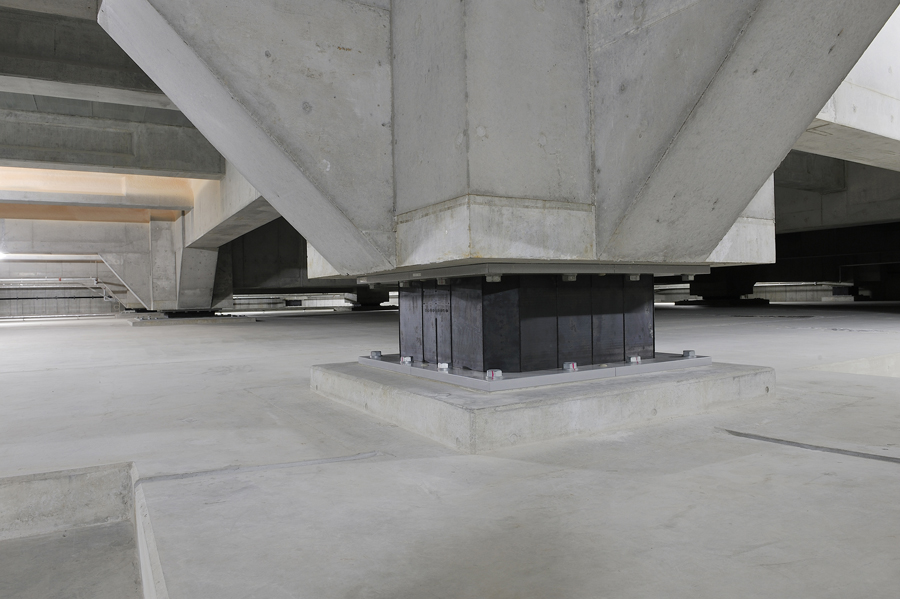
One of the building’s key features is the adoption of a seismic isolation structure. Seismic isolation rubber is installed between the warehouse structure and the concrete foundation below, reducing shaking to between one-half and one-quarter even during a major earthquake. Warehouses equipped with seismic isolation structures are still relatively rare in Japan.
Laminated rubber seismic isolation device that reduces the shaking of the building
The choice of location was carefully considered. Hanyu was selected for its relatively flat terrain and absence of known active faults. Even during earthquakes in which surrounding municipalities recorded a seismic intensity of 5, Hanyu has typically experienced about intensity 4—one level lower. Located about 60 kilometers from central Tokyo and accessible in just over an hour via the Tohoku Expressway, the site occupies an ideal position: far enough inland to avoid tsunami risks while still allowing daily delivery operations to proceed without disruption.
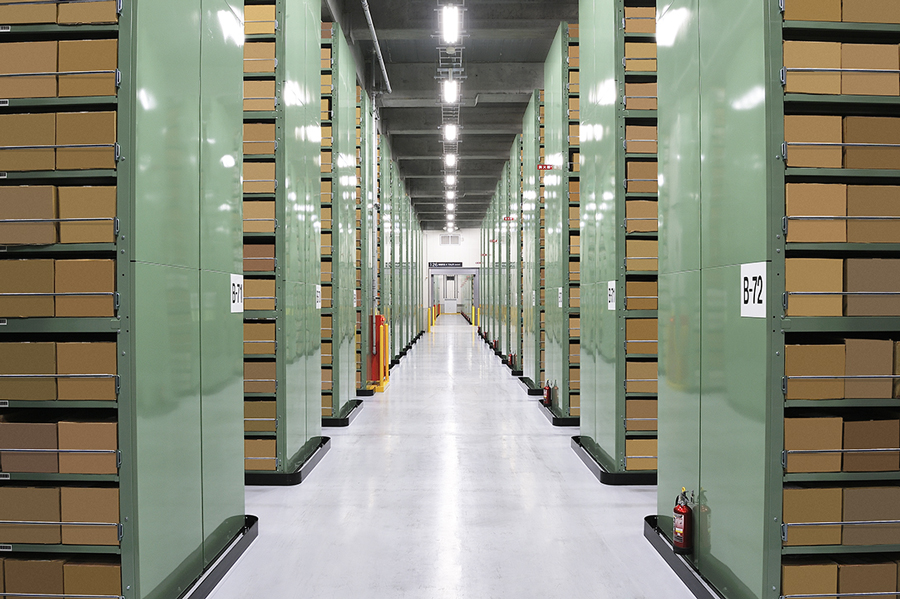
The warehouse provides four different storage environments. Ambient storage, which accounts for 80 to 90% of the total space, is not equipped with air-conditioning systems but typically maintains temperatures of around 10°C in winter and about 30°C in summer.
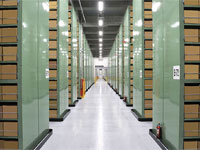
High-rise shelving with fall-prevention features
Another zone features what the company calls “office-grade air conditioning.” Established primarily for the pharmaceutical industry, it is designed to store documents related to pharmaceutical research and development—information that can directly affect human lives and is subject to strict guidelines from Japan’s Ministry of Health, Labour and Welfare. Temperatures are maintained at 26°C or below, and some areas are equipped with nitrogen gas fire-suppression systems.
In addition, separate areas are maintained under “constant temperature and humidity” and with “refrigerated” conditions. These sections are used for storing magnetic tapes and motion picture film. Older analog film in particular is susceptible to a form of deterioration known as “vinegar syndrome,” which occurs over time, and low-temperature storage is intended to slow this process. Video works from the 1970s and 1980s, along with prewar newspapers, rest undisturbed in storage here.
Meeting the pharmaceutical industry’s stringent SOP requirements
The defining feature of Hanyu Archives No. 2 is its ability to comply with GxP requirements. GxP is a collective term for regulations and guidelines designed to ensure quality and safety of pharmaceutical products in manufacturing, distribution, etc. At the heart of GxP are Standard Operating Procedures (SOPs). SOPs are not set in stone once established. Each year, operations are reviewed and relevant personnel engage in discussions and exchanges of views, followed by a regular annual revision of the SOPs. By continuously updating them to reflect insights and practical experience gained in day-to-day operations, an effective operational framework is consistently maintained.
The materials stored here are records generated during the research and development, manufacturing, and distribution of pharmaceutical products, whose preservation is mandated by ordinances of Japan’s Ministry of Health, Labour and Welfare. Pharmaceutical companies therefore require storage facilities to maintain strict management standards. Only a very small number of warehousing companies in Japan are capable of meeting requirements at this level.
Amid the headwinds of digitalization
The business environment for warehousing remains challenging as digitalization continues to sweep across the industry. In the past, demand was strong for storing paper documents and magnetic tapes generated in offices, but today information is created digitally and stored in the cloud. Because most documents currently in storage have defined retention periods, the day may soon come when more materials leave storage than are newly deposited.
However, Sumitomo Warehouse is seeking to turn this headwind into an opportunity. One example is the expansion of services such as its document digitization service. By digitizing stored documents within the warehouse and keeping the original documents on-site, the risk of loss can be minimized.
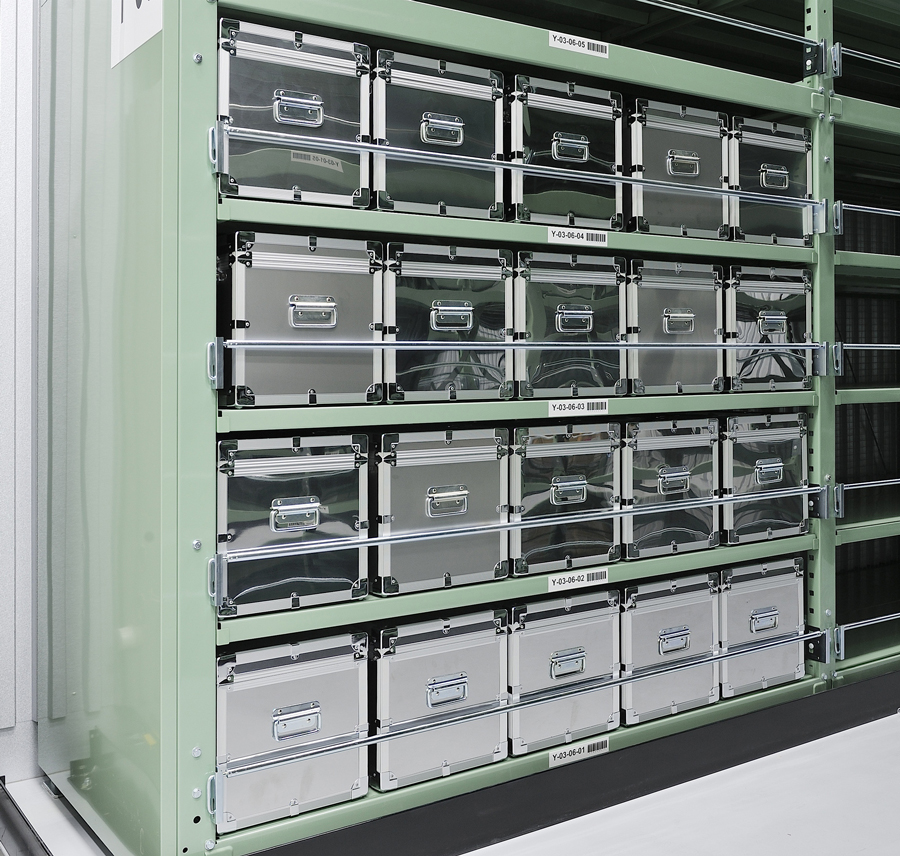
Another development is the reassessment of demand for magnetic-tape backups. As part of BCP measures, the “3-2-1 rule” has long been recommended for data backup: keeping three copies of data, storing them on two different types of media, and keeping one copy offsite. More recently, the “3-2-1-1 rule” has been proposed to protect information from cyberattacks and other threats, adding the practice of keeping one copy offline. As the risks associated with the storage of “corporate memory” become more diverse, Sumitomo Warehouse positions its magnetic tape storage service as the key to safeguarding that final “1,” while recommending security measures from the perspective of a warehousing specialist.
Dedicated containers for secure magnetic tape storage
Cultivating new storage demand
As part of its future-oriented initiatives, Sumitomo Warehouse is cultivating new storage demand by leveraging its expertise in the document storage systems, such as retention-period management. Document management and the management of disaster preparedness supplies are typically handled by general affairs departments in many companies. However, by providing comprehensive storage services that cover not only documents but also supplies for infectious disease countermeasures and disaster preparedness, the burden of companies can be significantly reduced. Furthermore, the company plans to actively expand storage demand for artworks and other high-value items by capitalizing on features such as seismic isolation structures, nitrogen gas fire-suppression systems, and temperature-controlled zones.
Amid the accelerating wave of digitalization, Sumitomo Warehouse is leveraging the expertise gained through its archives business to chart a new course to secure steady growth.
Journalist Shumon Mikawa on Sumitomo’s DNA
Founded in 1899, Sumitomo Warehouse has been engaged in the warehousing business for over 125 years and is one of the oldest companies in the Sumitomo Group. Ever since its establishment, the company has upheld Sumitomo’s business philosophy of “according prime importance to integrity and sound management while never pursuing easy gains.” Rather than seeking short-term speculative profits, the principle of “contributing to society through business” has formed the foundation of Sumitomo Warehouse since long before corporate social responsibility came to be widely recognized in Japan and overseas.
The archives business in Hanyu can be seen as an exemplary embodiment of Sumitomo’s business philosophy. Safeguarding corporate information assets may seem like work carried out behind the scenes. Yet without it, business continuity would become extremely difficult, and society itself could not function. In the event of a disaster, the organizations that support business continuity on the front lines are logistics companies that have quietly and steadfastly protected information—the “corporate memory.” Sumitomo’s philosophy of jiri-rita koushi-ichinyo, “Benefit self and benefit others; private and public interests are one and the same.”—the idea that one’s own interests and those of society are inseparable—still lives on quietly but profoundly in Hanyu.

 EN
EN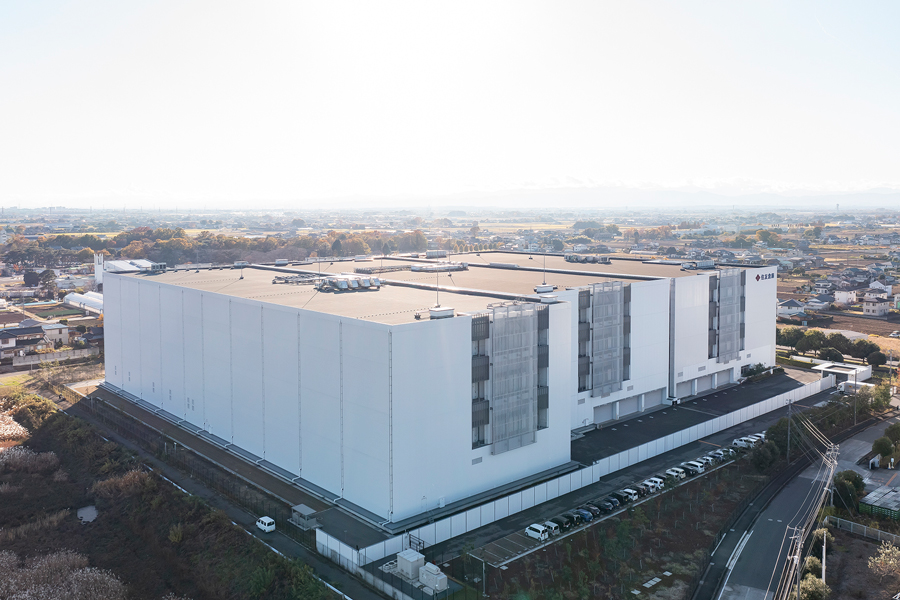
 Journalist Shumon Mikawa on Sumitomo’s DNA