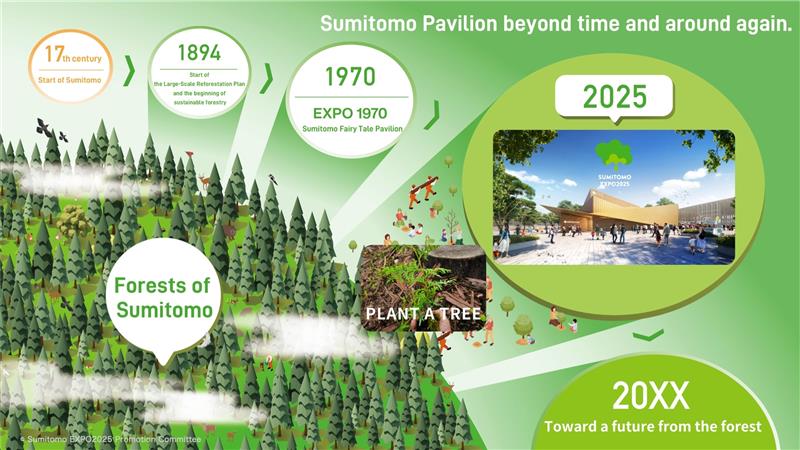
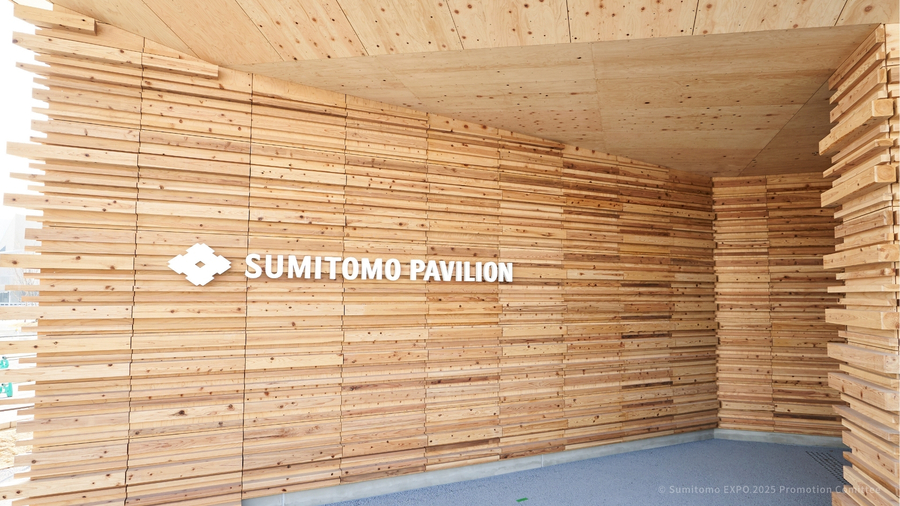
The Sumitomo Pavilion was constructed directly in front of the East Gate of the Expo site. It was built using trees from the Sumitomo Group’s “Sumitomo Forest,” with every part of the trees carefully utilized, guided by the desire to “cherish the life of each and every tree.” Designed as a space that connects past, present, and future, the pavilion embodies the concept of “Sumitomo Pavilion Beyond Time and Around Again,” linking the trees of the forest inherited from the past to the future through the tree-planting experience.
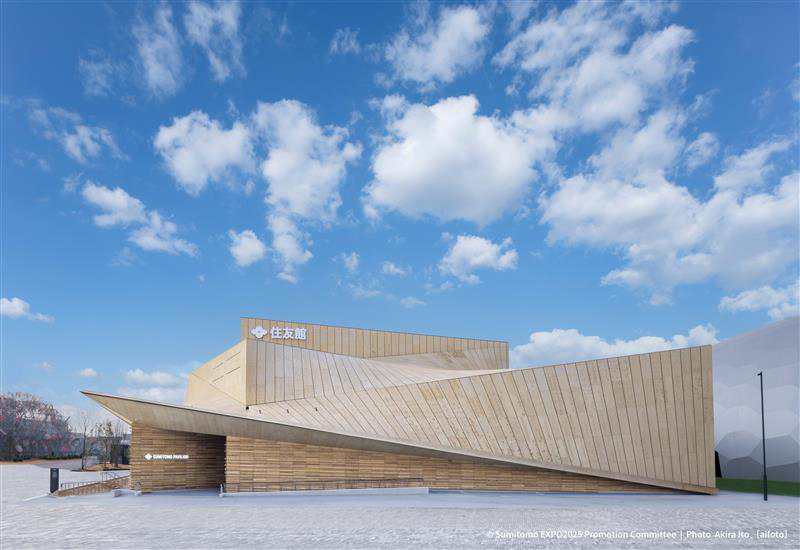
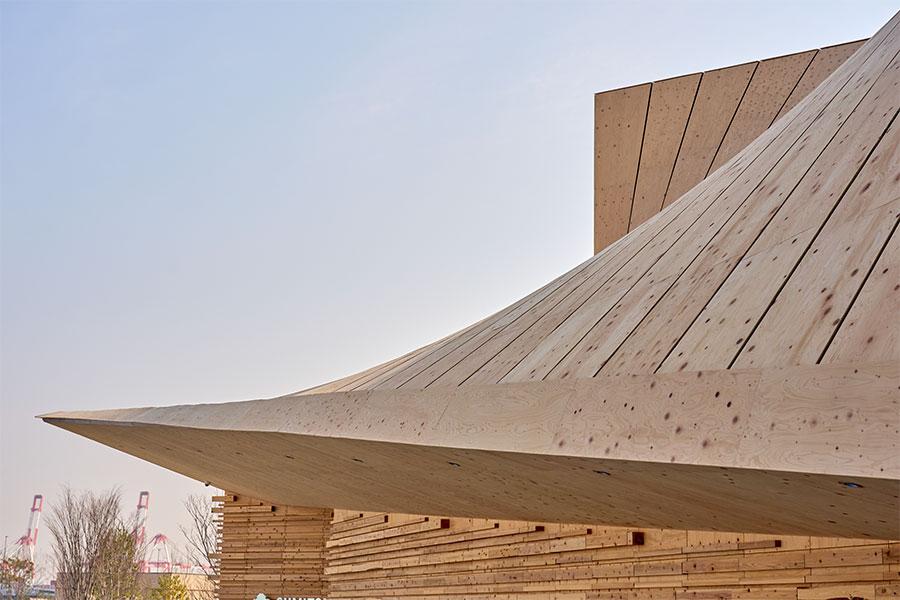
A distinctive feature of the architectural design is the roof, which forms a curved surface using a series of straight lines. Inspired by the Besshi Ridge in Shikoku—the site of the copper mines that figured prominently in Sumitomo’s development—the design evokes the silhouette of a mountain range. Many of the Sumitomo Group’s businesses originated from the Besshi Copper Mines, which operated for approximately 300 years. The Besshi Mountains, where afforestation was carried out over 100 years to restore greenery after the devastation caused by mining, are of special significance to the Sumitomo Group. By representing the Besshi Ridge, the Sumitomo Pavilion also embodies the group’s business philosophy—“Benefit self and benefit others, private and public interests are one and the same”—reflecting a commitment to consider not only one’s own interests but also those of the environment and the public.

 EN
EN