Vanadium redox flow batteries: A key to stabilizing power supply in the renewable energy era
As the large-scale adoption of renewable energy continues, stabilizing power grids has become an urgent challenge. Because the output of renewable sources such as solar and wind power fluctuates significantly with weather conditions, large-capacity energy storage technologies are essential to maintaining a stable electricity supply.
As a key technology for addressing this challenge, Sumitomo Electric has commercialized and deployed vanadium redox flow batteries. These large-capacity energy storage systems charge and discharge electricity by circulating electrolyte through the battery using pumps. The name “redox flow battery” derives from the oxidation-reduction (redox) reactions and the flow of the electrolyte.
Key advantages include safety, long service life, and scalability to large capacities
Vanadium redox flow batteries offer three key strengths: safety, long service life, and scalable energy capacity. In terms of safety, the electrolyte is non-flammable and all components are made of flame-retardant materials. As a result, vanadium redox flow batteries are not classified as hazardous materials under Japan’s Fire Service Act, and therefore pose an extremely low risk of fire compared with lithium-ion batteries.
Long service life is another key advantage. In a typical lithium-ion battery, the active material in the electrodes gradually deteriorates through repeated charging and discharging, causing the battery’s capacity to decline over time. As a result, operation at approximately one cycle per day is considered the practical upper limit, and the number of cycles has a significant impact on overall battery life. In contrast, a vanadium redox flow battery stores the active material (vanadium, in this case), which is used in charging and discharging, as an electrolyte in tanks. The electrolyte is then circulated through the cells by a pump, a design that prevents degradation from repeated charge-discharge cycles.
Principle of a vanadium redox flow battery (Source: Sumitomo Electric)
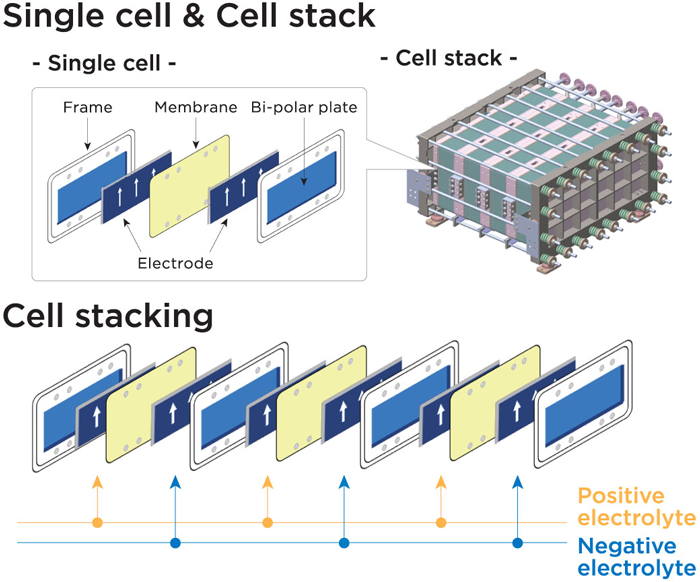
Configuration of a vanadium redox flow battery (Source: Sumitomo Electric)
In the new model, this characteristic has been leveraged to extend the operational life from the conventional 20 years up to 30 years. This represents a significant advantage in terms of life-cycle cost—the total cost incurred from the start of operation through to disposal.
With respect to scalability, vanadium redox flow batteries have a structural advantage: because energy capacity is directly determined by the volume of electrolyte, storage capacity can be increased simply by expanding the electrolyte tanks.
The principle of the redox flow battery was originally developed at the National Aeronautics and Space Administration (NASA) in the 1970s, and in Japan there is a history of demonstration projects led by electric power utilities. Sumitomo Electric once withdrew from the field due to a surge in vanadium prices, but re-entered the market after prices stabilized. Today, it has established a unique position as the only manufacturer in Japan with a track record of commercial deployments.
Real value revealed through multi-use applications
The applications and customer base for vanadium redox flow batteries have evolved significantly in response to changes in electricity market regulations. In the initial phase of deployment, large-scale demonstration projects led by grid operators were the norm, aimed primarily at smoothing fluctuations in renewable energy output. A typical example is the large-scale system installed at the Minami-Hayakita Substation operated by Hokkaido Electric Power Network, introduced as part of a demonstration project conducted by the Ministry of Economy, Trade and Industry (METI) between fiscal years 2013 to 2018, which remains in operation today. At that time, regulations were introduced requiring batteries to be installed alongside wind and solar power generation to mitigate output variability. As a result, transmission system operators—responsible for maintaining a stable electricity supply—took the lead on the grid side in deploying energy storage systems.
Vanadium redox flow battery system delivered to the Minami-Hayakita Substation of Hokkaido Electric Power Network (Source: Sumitomo Electric)
However, this situation changed in 2021, when a balancing market was established and trading began across Japan, excluding Okinawa. Cases of transmission system operators installing their own storage batteries have declined, as power companies shifted to procuring balancing capacity through the market. Consequently, the primary customers for vanadium redox flow batteries have become power producers that trade the value of grid stabilization in the market.
In this market environment, vanadium redox flow batteries’ resistance to degradation over multiple charge-discharge cycles proves especially valuable in multi-use applications. A prime example is their deployment at Kashiwazaki Ideal & Realistic Energy, a new power company in Kashiwazaki City, Niigata Prefecture, which has been operational since September 2024. The company simultaneously supplies electricity to local residents and businesses while trading surplus power on the Japan Electric Power Exchange (JEPX). Pursuing these two objectives at once naturally increases the number of daily charge-discharge cycles, but with vanadium redox flow batteries, concerns about degradation are virtually eliminated.
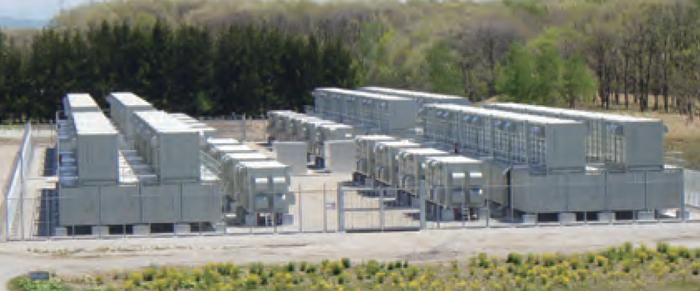
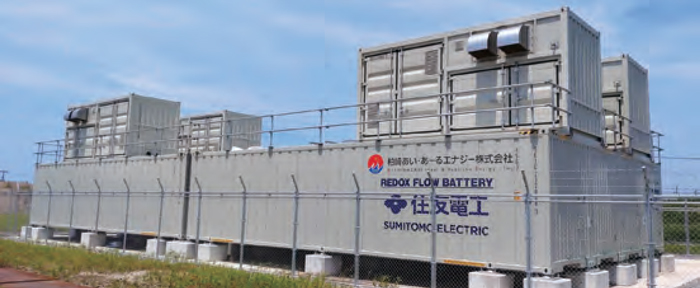
Vanadium redox flow battery system delivered to Kashiwazaki Ideal & Realistic Energy in Kashiwazaki City (Source: Sumitomo Electric)
In the United States, a demonstration project in California conducted by the New Energy and Industrial Technology Development Organization (NEDO) provides a clear example of the suitability of vanadium redox flow batteries for multi-use applications. In a region prone to both unplanned and scheduled power outages, the batteries perform market-optimization trading under normal conditions and serve as a backup power source within a microgrid during emergencies.
Toward a society where no generated energy is wasted
Sumitomo Electric’s future development strategy rests on two pillars: further reducing initial deployment costs and supporting long-duration energy storage (LDES). Although the new model has already achieved a roughly 30% cost reduction, initial costs remain a challenge. The company is therefore focusing on cost reduction through optimization of manufacturing processes and components.
Another important global trend is the move toward LDES. This technology enables discharge times of several tens of hours—far exceeding the few hours typical of conventional storage systems—and is gaining significant traction, particularly in the U.S.
Currently, container-type products—which are easy to construct and install—dominate the market. However, there are also plans to enlarge tanks or construct pool-style storage reservoirs to hold large volumes of electrolyte and achieve ultra-long-duration operation. In Japan, METI is promoting the expanded adoption of LDES, and vanadium redox flow batteries’ suitability for extended-duration use is expected to become increasingly important in coming years.
The future Sumitomo Electric envisions for its vanadium redox flow battery business is a society that makes full use of the energy generated. By leveraging the batteries’ safety, long service life, and scalability to large capacities, the company aims to achieve this vision in an era of widespread renewable energy adoption.
Journalist Junichiro Hori on Sumitomo’s DNA
Sumitomo’s business philosophy, nurtured over its 400-year history, traces its roots to the Monjuin Shiigaki (Founder’s Precepts), a set of business principles written in his later years by Masatomo Sumitomo, the founder. In particular, the concept of jiri-rita koushi-ichinyo—“Benefit self and benefit others; private and public interests are one and the same.” (Sumitomo’s business must benefit the nation and society, and emphasize harmony with the public interest)—has been handed down through the generations in the Sumitomo Electric Group. This philosophy underpins the company’s long-term management vision, Goho Yoshi (Five-Way Win), which seeks to create value for all five stakeholders: employees, customers, suppliers, local communities, and shareholders and investors. The pursuit of a society that makes full use of the energy generated by applying vanadium redox flow batteries is a concrete expression of jiri-rita koushi-ichinyo in action.

 EN
EN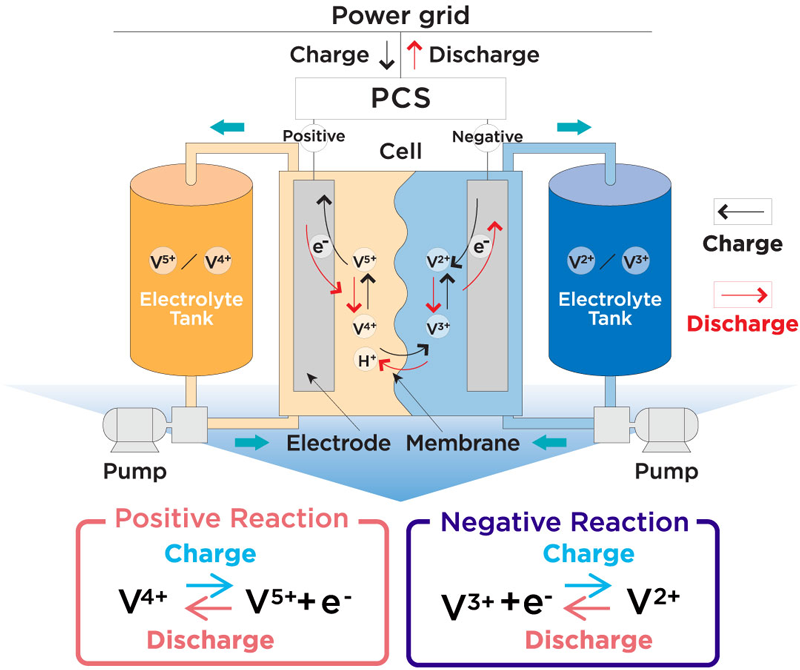
 Journalist Junichiro Hori on Sumitomo’s DNA