Sumitomo and Co-Creation—Articulating a Vision—
Japan Research Institute
Have you ever heard of the terms “eco-label” or “Carbon Footprint of Products”? An eco-label is a mark or symbol that indicates how a product or service contributes to reducing environmental impacts. Carbon Footprint of Products is a measure that quantifies greenhouse gas emissions across the entire “life cycle” of a product or service—from raw material procurement to disposal and recycling—and expresses them as CO2 equivalents.
The Innovation & Co-Creation Department at the Japan Research Institute has developed an Eco-Label Learning Kit to help children learn about eco-labels and Carbon Footprint of Products, and is promoting initiatives that link this learning to purchasing decisions for products and services.
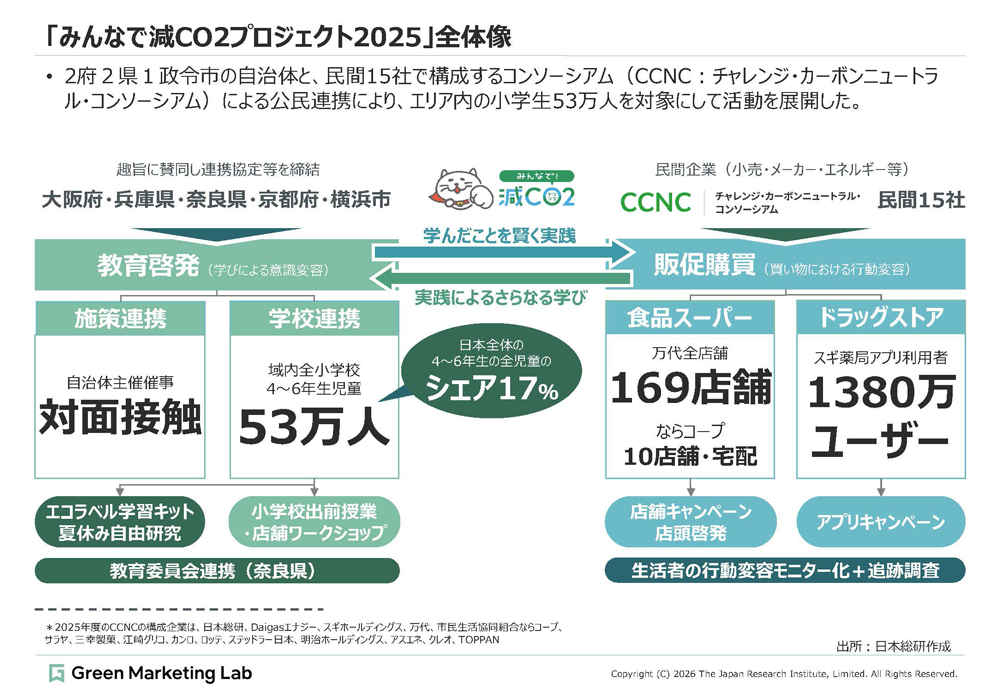
The Green Marketing Lab (GML), which promotes these initiatives, was established in 2023 and organizes the Challenge Carbon Neutral Consortium (CCNC). In partnership with participating companies and local governments, GML is promoting a public-private project called the “Project for Everyone to Reduce CO2 (Genkotsu)”—meaning “Everyone’s CO2 Reduction Project.”
In fiscal 2025, GML collaborated with five local governments—Osaka, Hyogo, Nara, and Kyoto Prefectures, and Yokohama City—and promoted the initiative together with 15 private-sector participants, including retailers such as Mandai, a Kansai-based supermarket chain, and Sugi Holdings, which operates SUGI Pharmacy nationwide, as well as manufacturers and solution partners. The project targets approximately 530,000 fourth- to sixth-grade students attending elementary schools in the partner municipalities, as well as their parents.
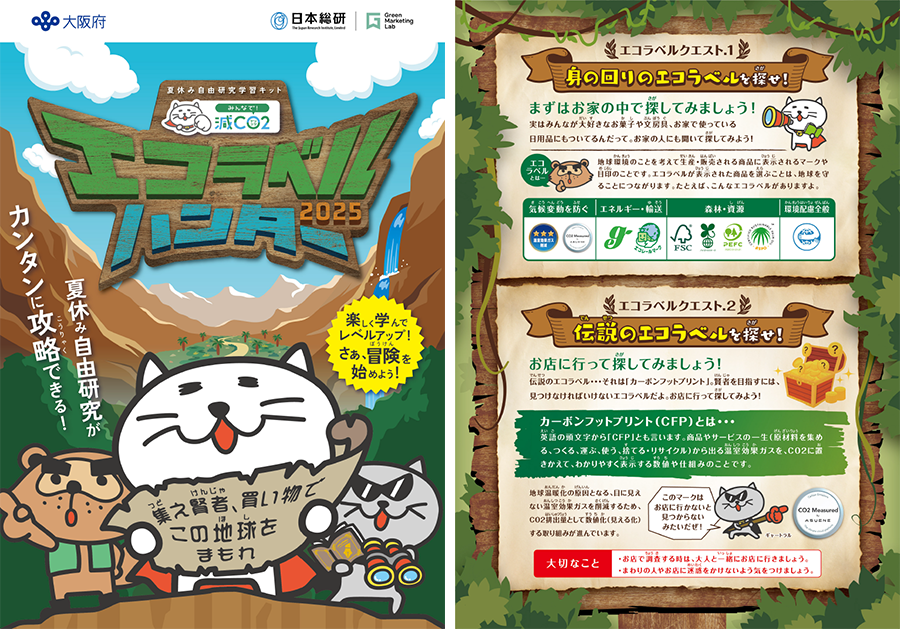
A learning kit that teaches children about eco-labels and Carbon Footprint of Products is first distributed through local governments and schools. During the summer vacation period, an educational contest called “Eco-Label Hunter,” linked to the learning kit, is then held. A system has also been established so that children search for products displaying eco-labels or Carbon Footprint of Products information at home or in stores and register them on the website.
If children actively look for eco-labels, their parents will inevitably visit stores as well. Retailers respond by launching campaigns that encourage this process and translate what has been learned into actual purchasing behavior.
The key point here is that, rather than simply offering discounts on products, the campaign targets only “products bearing an eco-label,” thereby intentionally creating an “extra step” that prompts consumers to pick up the product and check its environmental value. The focus is on designing an integrated approach that seamlessly combines consumers’ “learning” and “purchasing behavior,” treating education and purchasing as a single, end-to-end process.
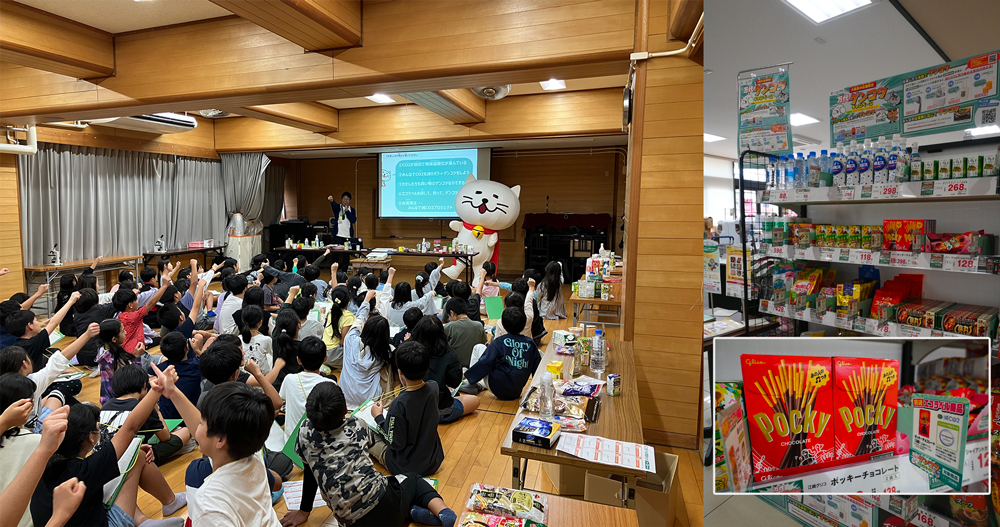
It all began with a sense of frustration felt by a staff member who had been engaged in consulting in the energy and environmental fields for over 20 years. No matter how much effort companies make to decarbonize, those efforts cannot be sustained unless consumers—the end users—support them through their purchasing decisions.
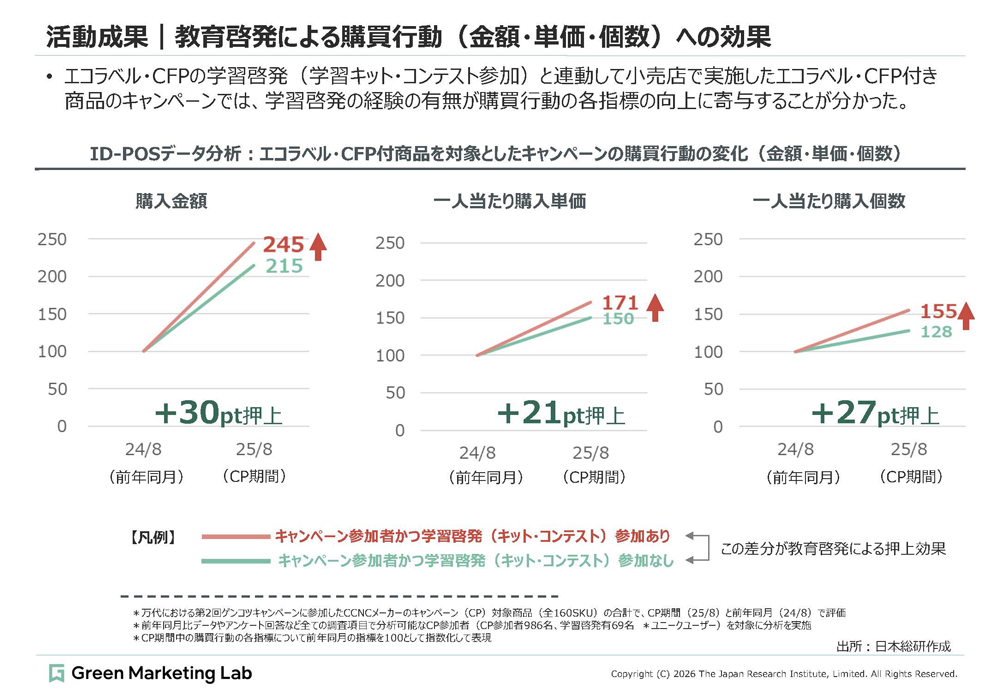
The most significant finding of the project was that it quantitatively demonstrated the hypothesis that “education and awareness drive purchasing behavior.” Whereas the effectiveness of environmental awareness raising initiatives has often been assessed only through questionnaire surveys, this project undertook an analysis of point-of-sale (POS) data.
During the demonstration period in August 2025, participants in Mandai’s in-store campaign were analyzed. The results showed that the group that used the learning kit and engaged in “in-depth learning” through the Eco-Label Hunter initiative (learning group) recorded values for key purchasing indicators—such as total purchase amount, average unit price, and number of items purchased—that were 20 to 30 points higher than those of the group that simply visited the store and made purchases as part of the campaign (non-learning group).
Furthermore, it is worth noting the impact on “repeat purchases.” The results of a two-month follow-up survey conducted after the demonstration period showed that the learning group not only had a higher initial purchase rate than the non-learning group but also tended to have a higher repeat purchase rate.
Survey results also clearly reflect changes in consumer awareness. Nearly 30% of respondents stated that “I bought the product for the first time because it had an eco-label,” and behavioral changes were also observed, with some stating, “although it was slightly more expensive than usual, I chose to purchase it because it is environmentally friendly.” This suggests that when provided with appropriate information, consumers are not bound solely by price and may shift toward “supportive consumption” that values environmental benefits.
The journey from launching this project to its implementation faced significant obstacles stemming from existing organizational structures. Because the initiative spans the cross-cutting areas of education and awareness on the one hand, and sales promotion and purchasing on the other, the lack of clear ownership—specifically, the question of “which department should be responsible”—has posed a barrier for both government agencies and private companies. Roles are fragmented, with sustainability departments handling decarbonization and marketing or sales promotion departments handling product sales, making internal initiatives difficult to advance and often leaving them in limbo.
GML has overcome this obstacle by patiently identifying and engaging key individuals within each organization. Initially, many companies were reluctant to embrace a proposal based solely on a “concept” with no tangible substance, but once the results of the first year’s demonstration project were visualized, the number of participating companies steadily increased from seven in the first year to double digits in the second year.
Underlying this is the “green agency” concept, which aims to reallocate a portion of Japan’s annual advertising and promotion expenditures—amounting to approximately 22 trillion yen—to education and awareness initiatives related to decarbonization. Rather than simply supporting short-term advertising and promotion aimed at boosting sales, the aim is to create sustainable markets by enhancing consumer literacy grounded in corporate integrity. GML intends to assume this agency role.
Plans call for the scope of the project to be gradually expanded—from elementary school students to junior high school, high school, and university students. The aim is to provide an environment in which children who learn about decarbonization in elementary school can go on to lead such efforts and continue learning as they grow. By creating this progression, decarbonization can be established not as a temporary movement, but as an enduring aspect of culture for the next generation.
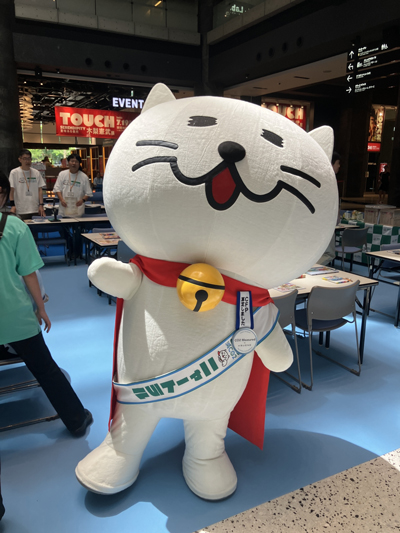
GML has also designed a character named “Nyatral.” Modeled after a cat, its name combines the sound of a cat’s meow with the concept of carbon neutrality. Nyatral serves as a symbol for transforming awareness raising from something “difficult and formal” into something “approachable and enjoyable.” In addition to appearing at events across the country, the Nyatral mascot also features at events such as Family Day, where people invite their families to the workplace, helping to boost employee engagement.
The vision that Japan Research Institute sets out for this project is “autonomous symbiosis.” In today’s information-saturated world, consumers are often guided by targeted advertising on social media and other platforms rather than making independent choices. The Institute instead envisions a society in which consumers actively engage with information on their own terms and autonomously choose environmentally responsible purchasing behavior. Together with Nyatral, it aims to foster an autonomous, symbiotic, carbon-neutral society.
 Journalist Junichiro Hori on Sumitomo’s DNA
 EN
EN